Showing posts with label breast cancer. Show all posts

Wednesday, May 12, 2010

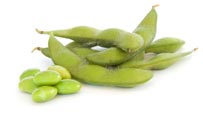
Soy food & isoflavone intakes reduce breast cancer risk

A recent study among Chinese women showed that those with the highest intakes of soy foods and soy isoflavones had a significantly lower risk of breast cancer.

Research seeking to find a connection between soy food consumption and breast cancer risk has produced conflicting results.

A recent case-control study was conducted to assess the relationship between soy food intake and breast cancer risk according to the estrogen receptor (ER) and/or progesterone receptor (PR) status of breast cancer. Participants included 438 Chinese women with primary breast cancer that were matched by age and residence (rural/urban) with 438 women free of cancer. Dietary intake was assessed by face-to-face interviews using a validated food frequency questionnaire.

Researchers observed a statistically significant inverse association between soy isoflavone and soy protein intake with breast cancer risk. The women in the group with the highest soy isoflavone intake had a 46% decreased cancer risk compared to the group with the lowest intake. Women in the group with the highest soy protein had a 38% reduced cancer risk compared to the lowest intake group. A preventive effect of soy food was found for all subtypes of ER and/or PR status of breast cancer. The inverse association was more evident among premenopausal women.

This study suggests that consumption of soy foods and soy isoflavones may reduce the risk of breast cancer, and that the protective effects of soy do not seem to differ by ER and PR breast cancer status.


Wednesday, May 05, 2010

Multivitamin supplements unrelated to breast cancer risk in large U.S. study

A recent Harvard Medical School study followed more than 37,000 U.S. women for 10 years and found no correlation between multivitamin use and breast cancer risk.

Researchers from Harvard Medical School and Brigham and Women’s Hospital recently evaluated possible associations between multivitamin supplements and risk of breast cancer. At the beginning of the study, 37,920 cancer-free U.S. women aged 45 and older provided detailed information on multivitamin supplement use. Throughout an average of 10 years of follow-up, 1,171 cases of breast cancer were documented.

The use of multivitamin supplements was not associated with an overall risk of breast cancer in this large study group. High frequency of use (at least 6 times per week) and duration of supplementation (current use for at least 20 years) were not associated with an increase in risk compared to non-users. A small reduction in breast cancer risk was seen in multivitamin users who consumed 10 grams/day of alcohol or more. There was also a slight decrease in risk of estrogen receptor negative-progesterone receptor negative breast cancer among multivitamin users.

The researchers stated that although there was no overall statistically significant association between multivitamin use and breast cancer, multivitamins may reduce the risk for women consuming alcohol and in certain estrogen receptor negative cancers.


Wednesday, January 27, 2010

Moderate soy intake improves survival in breast cancer patients

In a large prospective study of female breast cancer patients treated surgically, moderate soy intake was associated with a significant decrease in death and cancer recurrence during a 4 year follow-up.

A recent study published in the December 9, 2009 edition of the Journal of the American Medical Association provides more evidence of the safety of dietary soy intake in breast cancer patients.

Researchers found that a higher intake of soy foods was associated with a reduced risk of breast cancer recurrence as well as a lower risk of dying over a four year period following diagnosis.

Participants included 5,033 women in the Shanghai Breast Cancer Survival Study who were surgically treated for breast cancer. The women were enrolled between 2002 and 2006 and followed through June 2009. Intakes of soy protein and soy isoflavones were analyzed from several interviews and dietary questionnaires.

Over an average follow-up of about four years, women whose intake of soy protein was among the top 25 percent of participants had a 29 percent lower risk of death during follow-up and a 32 percent lower risk of recurrence compared to those whose intake was in the lowest quarter. When soy isoflavones were evaluated separately, the risk of dying over follow-up was 21 percent lower and the risk of recurrence was 23 percent lower for those whose intake was highest. The use of tamoxifen and hormone therapy were also associated with improved survival.

In this population-based prospective study, soy food intake was found to be safe and was associated with lower mortality and recurrence among breast cancer patients. The association of soy food intake with mortality and recurrence appears to have followed a linear dose response pattern until soy food intake reached 11 g/day of soy protein. No additional benefits on mortality and recurrence were observed with higher intakes of soy food. This study suggests that moderate soy food intake is safe and potentially beneficial for women with breast cancer.


Wednesday, August 06, 2008

Vitamin D insufficiency common among breast cancer survivors

New research published in the American Journal of Clinical Nutrition showed a correlation between vitamin D levels and various stages of breast cancer development.

Vitamin D influences pathways related to cancer development, but little is currently known about vitamin D status in breast cancer survivors. Recent data taken from the Health, Eating, Activity and Lifestyle (HEAL) study showed a correlation between vitamin D status and breast cancer survivors. Vitamin D concentrations from 790 female breast cancer survivors were obtained and vitamin D insufficiency was found in 597 individuals - or 75% of participants. Average vitamin D concentrations were even lower among African American and Hispanic women.

Controlling for various factors such as body mass index (BMI), race/ethnicity, geography, season, physical activity, diet, and cancer treatments showed that stage of disease independently predicted vitamin D levels.

In this group of breast cancer survivors the prevalence of vitamin D insufficiency was abnormally high. Based on these results, health professionals and clinicians should consider monitoring vitamin D status in breast cancer patients in addition to administering appropriate cancer treatments.